


.png)

Thinking about updating your kitchen without removing perfectly good cabinets? This complete guide explains how replacement kitchen doors work, what to measure, which styles to compare and how to choose the right finish for your home.

Quick Answer: Are Replacement Kitchen Doors Worth It?
Yes, replacement kitchen doors can be one of the most effective ways to refresh a UK kitchen when the existing cabinet units are still solid, square and usable. Instead of replacing the full kitchen, you keep the cabinet carcasses and update the visible fronts, including doors and drawer fronts.
This can give the room a completely new look with less disruption, less waste and more control over budget. It is a practical option for homeowners who like their existing kitchen layout but want a cleaner, more modern or more personal finish.
What Are Replacement Kitchen Doors?
Replacement kitchen doors are new cabinet doors made to update the front of your existing kitchen units. They are designed to replace old, damaged, dated or tired-looking doors while leaving the main cabinet boxes in place.
For many homeowners, this is a practical middle ground between a small cosmetic update and a full kitchen renovation. If your kitchen layout still works and the cupboards are structurally sound, you may not need to rip everything out.
By changing the doors, drawer fronts, handles and sometimes plinths, panels or trims, the kitchen can feel brighter, cleaner and more modern without starting from scratch.
KBB offers a wide range of replacement kitchen doors, with options across different styles, colours and finishes.
When Should You Choose Replacement Kitchen Doors Instead of a New Kitchen?
Replacement kitchen doors are usually a good option when the main kitchen cabinets are in reasonable condition. If the boxes are still strong, the hinges can be fitted securely and the layout works for your daily routine, replacing only the fronts can be a smart move.
Choose Replacement Kitchen Doors If:
- Your cabinet carcasses are sturdy.
- You like your current kitchen layout.
- The doors look dated but the units still work.
- You want less disruption than a full refit.
- You want to update the colour, finish or style.
- You want to avoid replacing usable cabinets.
- You are refreshing a kitchen before selling or renting a property.
Consider a Full Kitchen Refit If:
- The cabinets are water damaged or unstable.
- The layout no longer suits your home.
- You need major plumbing or electrical changes.
- The units are badly out of square.
- You want to move appliances, walls or services.
A door replacement project can also be useful before selling a house, updating a rental property or modernising a family kitchen on a controlled budget. It focuses the spend on the part of the kitchen everyone sees first: the doors and drawer fronts.
Popular Styles of Replacement Kitchen Doors
The right door style depends on the look you want and the age of your home. A shaker door can feel timeless and homely, a slab door can look clean and contemporary, and a gloss or acrylic door can make a smaller kitchen feel brighter.
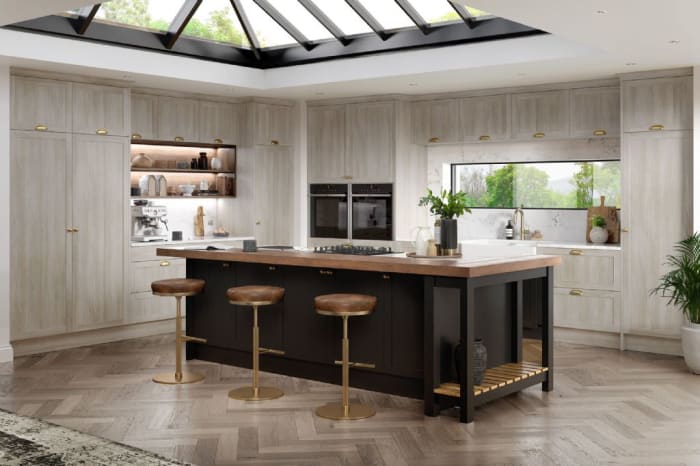
Shaker and Five-Piece Kitchen Doors
Shaker-style doors are one of the most flexible choices for UK kitchens. Their framed centre-panel design works in traditional homes, modern family kitchens and painted-look schemes.
They pair well with bar handles, cup handles or knobs, and they can be styled to look either classic or contemporary. If you want a design that will not date quickly, shaker replacement kitchen doors are a reliable place to start.
Slab Kitchen Doors
Slab doors have a simple flat front. They are a good choice if you want clean lines, minimal detail and a modern feel. They can also be easier to wipe down because there are fewer grooves and profiles.
Handle-Less Kitchen Doors
Handle-less styles are popular in modern kitchens where the goal is a streamlined finish. They help reduce visual clutter and can work especially well in open-plan spaces where the kitchen is always on show.

Gloss and Acrylic Kitchen Doors
Gloss and acrylic doors can help a kitchen feel brighter by reflecting light around the room. They are often chosen for smaller kitchens, apartments and contemporary spaces.

Paintable Kitchen Doors
Paintable doors are a great option if you want a custom colour. KBB’s paintable kitchen doors give you the flexibility to measure, hang and paint the doors in a colour of your choice.
This is useful if you are matching a specific paint brand, tying into existing decor or planning a bolder colour scheme.
For more visual ideas, browse the KBB gallery to compare real examples of kitchen door styles, colours and roomset inspiration.
Choosing the Right Colour and Finish
Colour and finish have a huge impact on how your kitchen feels. The same layout can look completely different in matt grey, gloss white, woodgrain oak or deep blue.
Before ordering replacement kitchen doors, think about natural light, room size, flooring, worktops, wall colour and the style of your handles.
Replacement Kitchen Door Finish Guide
| Finish | Best For | Look and Feel |
|---|---|---|
| Matt | Modern, soft and understated kitchens | Calm, smooth and less reflective |
| Gloss | Smaller or darker kitchens | Bright, reflective and contemporary |
| Woodgrain | Warm, natural or traditional schemes | Textured, homely and characterful |
| Paintable | Custom colour projects | Flexible and personalised |
Neutral colours such as white, cream, cashmere, light grey and dust grey remain popular because they are easy to live with and work with many worktops. Darker colours such as graphite, navy, black and deep green can create a more dramatic look, especially when paired with lighter walls or warm wood accents.
How to Measure for Replacement Kitchen Doors
Accurate measuring is one of the most important parts of ordering replacement kitchen doors. Measure the existing door or drawer front, not the cabinet opening.
Take the height and width in millimetres, and check each door individually rather than assuming they are all the same. Older kitchens can have slight size differences, especially if they have been adjusted, repaired or altered over time.
Measuring Steps
- Open or remove the old door if needed so you can measure it properly.
- Measure the height of the existing door in millimetres.
- Measure the width of the existing door in millimetres.
- Measure each drawer front separately.
- Check and record hinge positions if you need hinge holes drilled.
- Label every item clearly, such as “sink base left door” or “top drawer front”.
- Double-check your full list before ordering.
KBB has a dedicated how to measure a door guide, which is the best page to use before you place an order. This is especially important if you are ordering made-to-measure replacement kitchen doors.
Measuring Tip
Do not rely on the size of the cabinet unit alone. Two kitchens can have similar base units but different door overlays, hinge setups or drawer-front sizes. Measuring the existing fronts gives you the safest starting point.
Can You Fit Replacement Kitchen Doors Yourself?
Many replacement kitchen doors can be fitted as a DIY project, especially if you are replacing like-for-like doors and keeping the same hinge positions. You will usually need basic tools such as a tape measure, screwdriver, pencil and drill.
If the new doors are supplied with hinge holes, the job becomes more straightforward. The basic process is to remove the old door, transfer or fit the hinges, position the hinge into the pre-drilled holes, mark and drill fixing points if needed, then screw the hinge into the door and attach it back onto the cabinet.
For more detailed fitting advice, read KBB’s how to hang your cupboard door guide.
If your old kitchen has unusual hinges, damaged cabinets or doors that have dropped over time, take extra care. It may still be a simple job, but check the condition of the hinge plates and screws before fitting new doors.
How Much Do Replacement Kitchen Doors Cost?
The cost of replacement kitchen doors depends on the number of doors and drawer fronts you need, the size of each item, the chosen range, the finish, whether hinge holes are required and whether you are adding extras such as handles, panels, cornice, pelmet or plinths.
A small kitchen with a limited number of standard-size doors will usually cost less than a large kitchen with tall larder doors, multiple drawer fronts and made-to-measure pieces. Gloss, acrylic, painted and custom options may also vary in price depending on the specification.
What Affects the Total Price?
- The number of doors and drawer fronts.
- Door sizes and whether any are made to measure.
- The chosen material, range and finish.
- Whether hinge holes are drilled.
- Handles, knobs or handle-less design choices.
- Matching panels, plinths, cornices and trims.
- Delivery and fitting, if you are not installing them yourself.
The best way to budget is to make a full list of every door, drawer front and finishing piece before comparing styles. Once you know the quantity and sizes, it becomes much easier to compare ranges on the KBB kitchen doors page.
Replacement Kitchen Doors Buyer’s Checklist
Before you order, use this checklist to make sure your project is properly planned.
1. Check the Existing Units
Make sure the cabinet boxes are strong, dry and suitable for new hinges or hinge plates. Replacement kitchen doors are only worthwhile if the units behind them are still usable.
2. Measure Every Door and Drawer Front
Measure each existing door and drawer front in millimetres. Do not assume all similar-looking doors are the same size.
3. Choose Your Door Style
Compare shaker, slab, gloss, acrylic, handle-less and paintable options. Think about whether you want a traditional, modern, minimal or custom-colour finish.
4. Plan the Details
Decide whether you need hinge holes, handles, drawer fronts, plinths, end panels or other finishing pieces. These details help the finished kitchen look complete.
5. Use the Gallery for Inspiration
Before choosing your final colour or finish, visit the KBB gallery to see how different door styles look in real kitchen settings.
Should You Replace Bedroom or Bathroom Doors at the Same Time?
If you are already measuring doors for a kitchen project, it can be worth checking other fitted furniture around the home. The same idea can apply to bedroom wardrobes, bathroom cabinets and vanity units.
Updating multiple rooms can help create a more consistent finish across the property. KBB also offers replacement bedroom doors and replacement bathroom doors, so homeowners can use a similar approach in wardrobes, fitted storage and bathroom furniture.
Ready to Start Your Kitchen Refresh?
Replacement kitchen doors are a practical way to transform your kitchen without replacing the full room. Start by measuring your current doors, compare styles and finishes, then choose the range that best suits your home.
FAQs About Replacement Kitchen Doors
Can I just replace my kitchen doors?
Yes, if your existing cabinets are in good condition, you can usually replace the doors and drawer fronts without replacing the full kitchen. This is one of the main reasons homeowners choose replacement kitchen doors.
Do I need to measure the cabinet or the old door?
Measure the existing door or drawer front rather than the cabinet opening. This helps account for the correct overlay and fit.
Are replacement kitchen doors easy to fit?
Many replacement doors are suitable for DIY fitting, especially when hinge holes are drilled and the cabinets are in good condition. If you are unsure, read KBB’s hanging guide before starting.
Which kitchen door finish is best?
It depends on your room and style. Matt finishes feel soft and modern, gloss finishes reflect light, woodgrain adds warmth and paintable doors give the most flexibility for custom colour schemes.
Can I order made-to-measure kitchen doors?
Made-to-measure kitchen doors are useful when your existing doors are not standard sizes or when you need a more tailored replacement. Measure carefully and check each door individually before ordering.
Can I replace kitchen doors and drawer fronts together?
Yes, replacing doors and drawer fronts together usually creates the most complete finish. It helps the full kitchen look consistent rather than leaving older drawer fronts next to new doors.
